Create SEO-Optimized FAQs in Seconds
Stop guessing what your audience is searching for. Growmatix's free AI FAQ generator writes targeted, schema-ready frequently asked questions that help your pages rank in rich snippets, AI Overviews, and voice search.
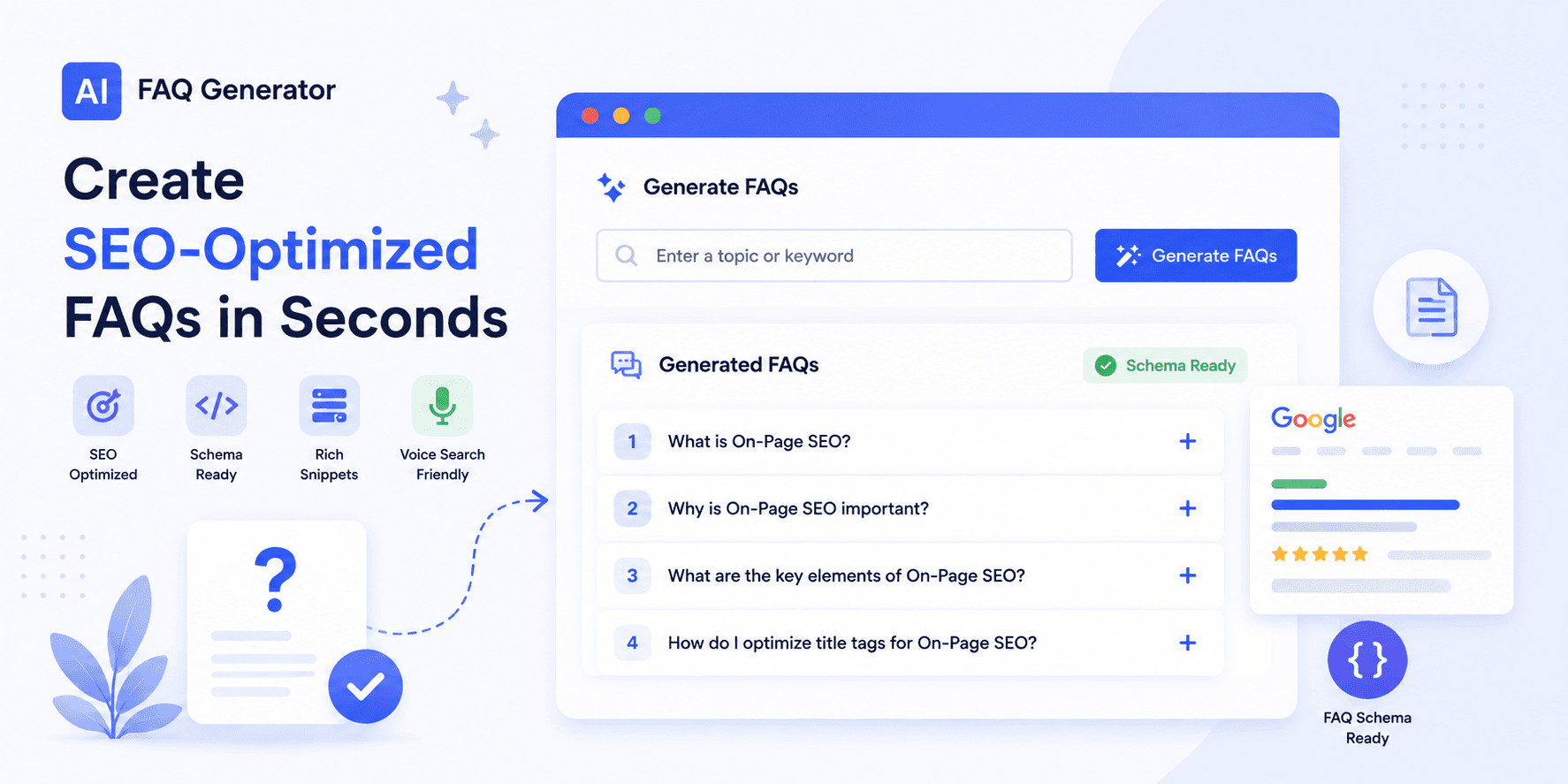
Enter the content or topic you want FAQs for.
Definition
“An AI FAQ generator is a tool that uses natural language processing to automatically produce relevant, conversational question-and-answer pairs for any topic, product, service, or blog post. You enter a topic or URL, and the AI handles the research, phrasing, and structure.”
What Is an AI FAQ Generator?
FAQs have quietly become one of the highest-leverage plays in modern SEO. They answer the exact questions real people type (and now speak) into search engines. When written well and marked up correctly, they claim valuable real estate in Google's featured results, show up in AI-generated Overviews, and even earn citations in tools like ChatGPT and Perplexity. The problem? Writing them well takes time. That's exactly the gap this tool fills.
Growmatix's AI FAQs generator goes one step further: it doesn't just write questions, it writes questions the way search engines reward them. Each output is crafted with concise, direct answers (ideal for featured snippets), natural phrasing (great for voice search), and topical depth (which builds E-E-A-T signals over time).
Google's AI Overviews, which now appear at the top of millions of search results, pull information from pages that answer questions clearly and authoritatively. Having a well-structured FAQ section is no longer optional; it's table stakes for any page that wants to compete in 2025 and beyond.
Why FAQs Improve SEO and AI Citations
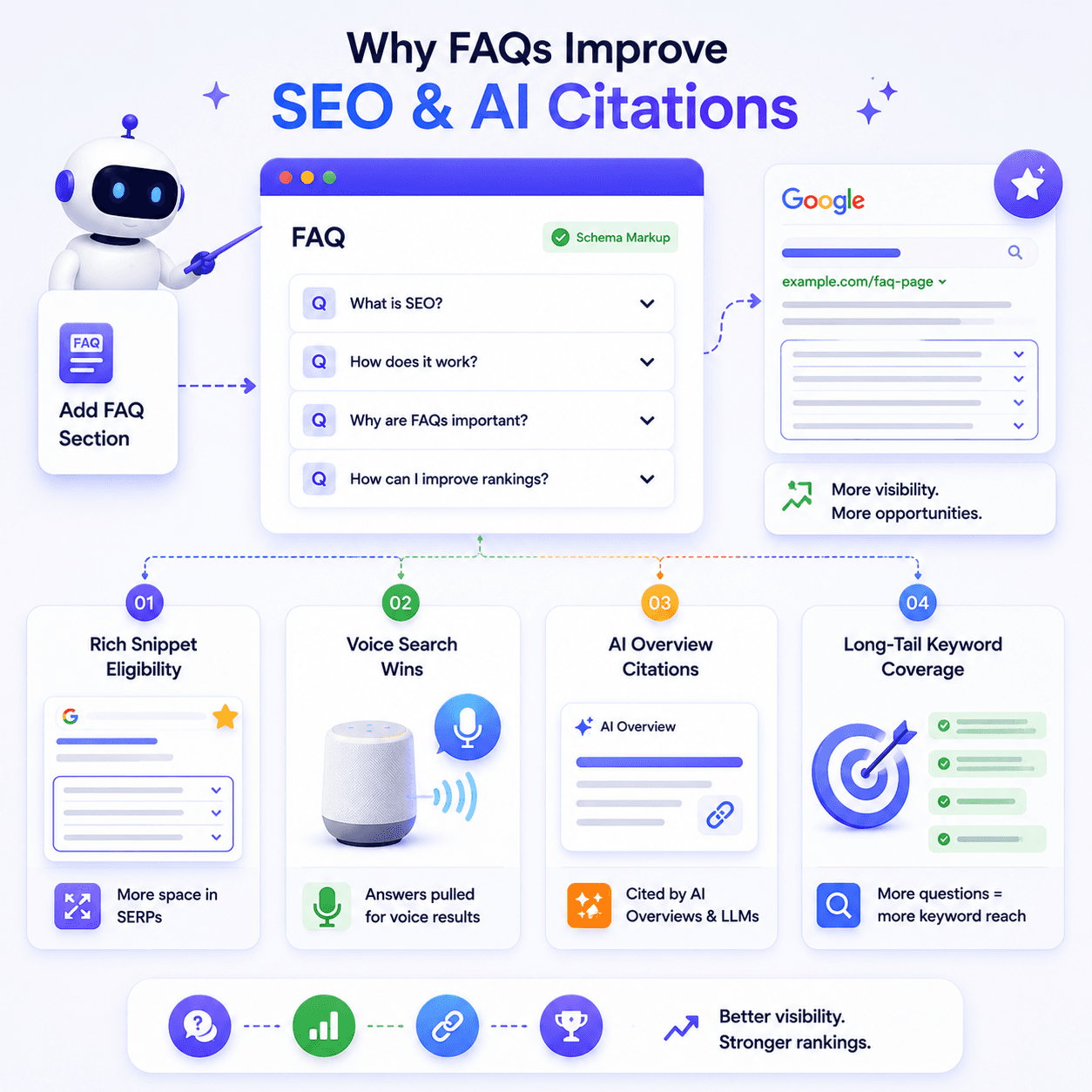
A good FAQ section isn't filler content; it's a strategic content block that earns you multiple types of search visibility at once. Here's what's actually happening behind the scenes when you add FAQs to a page:
Rich Snippet Eligibility
Pages with FAQ schema markup are eligible for expanded results in Google SERPs, giving you more screen real estate without earning a higher ranking.
Voice Search Wins
Voice assistants pull answers from pages with clear question-and-answer formatting. Short, direct FAQ answers are essentially pre-written for voice results.
AI Overview Citations
Google's generative AI Overviews and LLMs like ChatGPT cite pages that provide clean, factual answers to well-scoped questions. FAQs are exactly that format.
Long-Tail Keyword Coverage
Each FAQ inherently targets a long-tail query variation. More questions mean more keyword surface area without keyword stuffing the body copy.
How to Generate FAQs Using AI
Step-by-Step Guide
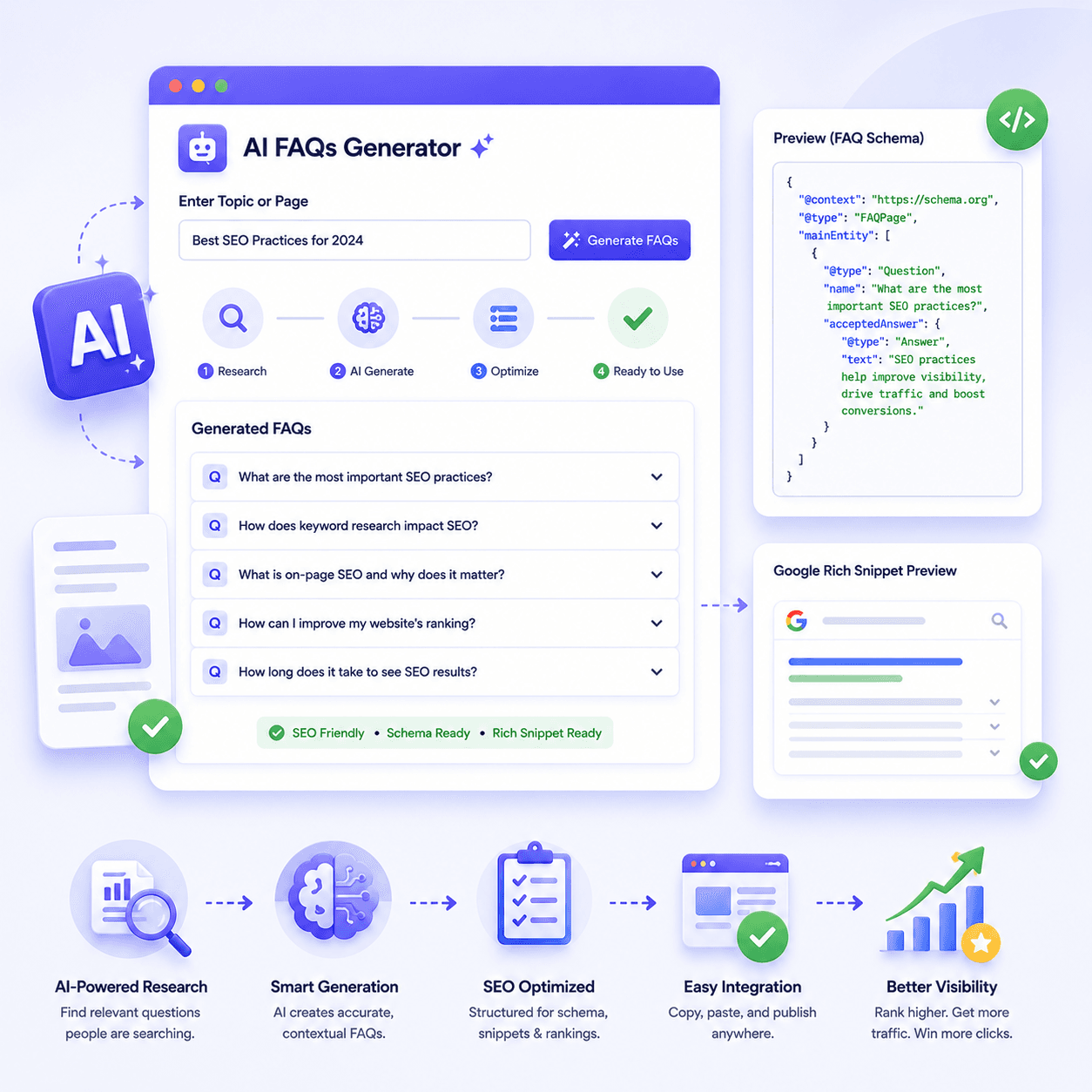
Using Growmatix’s FAQ schema generator takes just a few seconds. Here’s the exact workflow:
Type in a product name, service description, blog topic, or a brief. The more specific your input, the more targeted your FAQs will be. For instance, “CRM software for small law firms” will generate better results than “software.”
Select the number of FAQs you want and click “Generate FAQs”. The tool identifies the questions real users ask around your topic, pulling from informational, navigational, and transactional intent patterns to ensure broad coverage.
Read through the generated questions and answers. Adjust any that feel off-brand, overly generic, or inaccurate. Adding a real stat or internal link here adds major credibility.
After reviewing the generated FAQs, copy the ones that best match your content and paste them wherever you needed.
Types of FAQs You Can Create
A flexible SEO FAQ tool should support multiple content formats. Different types of pages benefit from different types of questions.
Product FAQs
Product pages often require answers related to usage, compatibility, pricing, or features. FAQs help address purchase concerns and reduce friction in the buying process.
Service FAQs
Service-based businesses frequently receive recurring client questions. Including these questions on landing pages builds trust and improves user clarity before inquiries are made.
Blog FAQs
Blog posts benefit from FAQs because they extend topical coverage. A well-written FAQ section can answer additional related questions that may not fit naturally within the main article. With such blog optimization tools, you can easily generate FAQs for blog posts that address real user queries and improve search visibility.
Local SEO FAQs
Local businesses can use FAQs to answer questions about operating hours, service areas, booking processes, or policies. These questions often mirror what customers search for before visiting a business.
How to Add FAQ Schema Markup
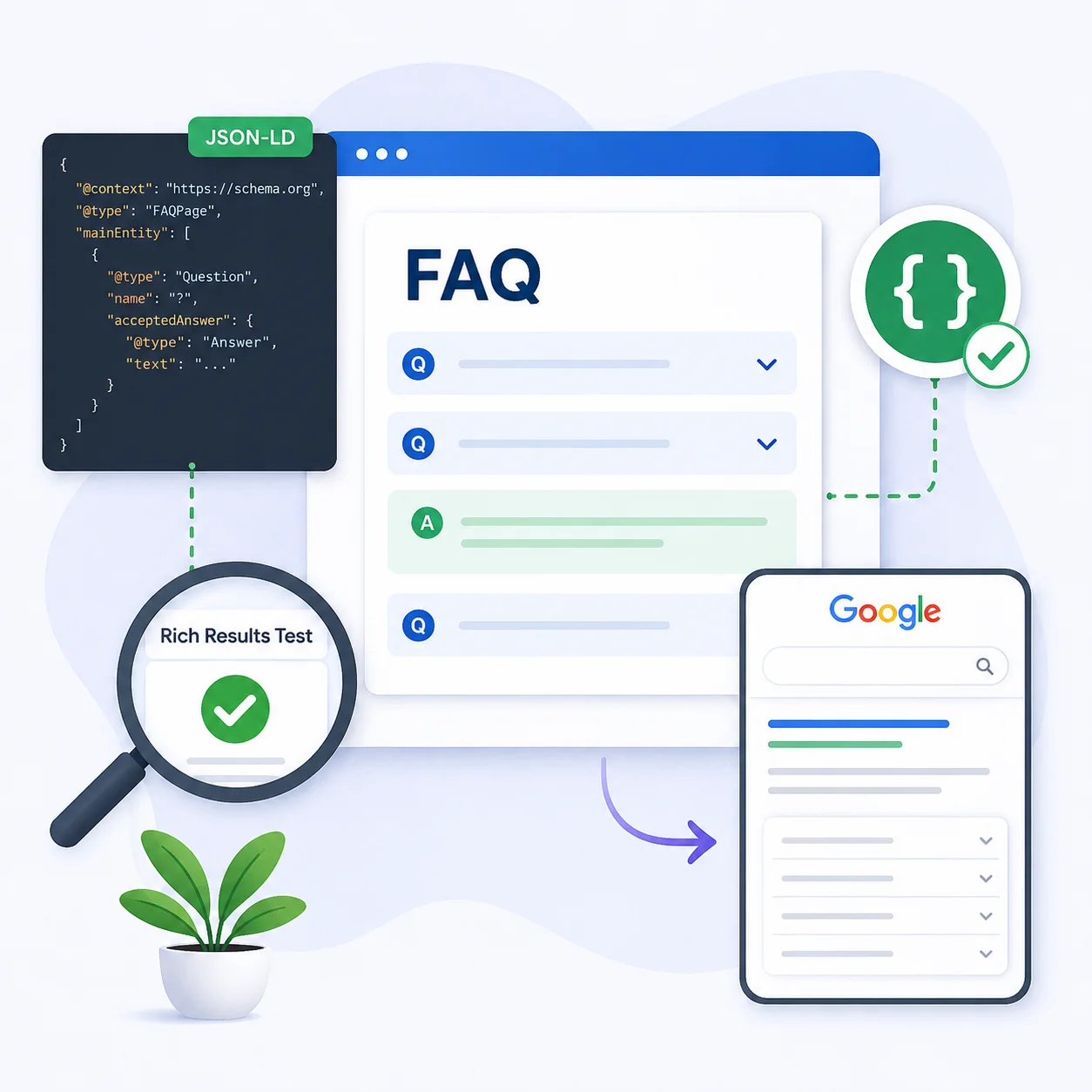
Creating FAQs is only part of the optimization process. To unlock full SEO value, they should also include structured data. FAQ schema markup is a type of structured data that helps search engines understand the question-and-answer format of your content. When implemented correctly, it enables search engines to display FAQ rich results directly on the search results page.
Schema markup is typically added using JSON-LD format within your page's HTML. Each question and answer is defined in structured code that search engines can interpret easily.
While adding schema manually is possible, many SEO tools and CMS plugins automate the process. The key requirement is ensuring that the visible content on your page matches the structured data.
Once it's deployed correctly, validate your markup using Google's Rich Results Test. If everything looks good, your page becomes eligible to show expanded FAQ dropdowns directly in Google Search, without any ranking boost required.
Best Practices for Writing SEO-Optimized FAQs
AI gets you 80% of the way there. Here's how to push the last 20% that separates a generic FAQ block from one that actually earns rankings:
Keep answers under 60 words when possible
Google's featured snippets favor concise, complete answers. If your answer requires more depth, lead with the direct response, then expand below.
Use the question phrase naturally in the answer
If the question is 'How long does SEO take?', starting the answer with 'SEO typically takes...' reinforces the query match for both crawlers and readers.
Aim for 5-8 FAQs per page
Enough to signal topical authority and provide snippet variety, without padding the page with noise that dilutes relevance.
Place FAQs near the bottom of the page
Above the footer. They should feel like a natural closing section, not an afterthought dumped at the end.
Update FAQs when your product or service changes
Stale FAQ content can create trust issues with both users and search engines. Set a quarterly review reminder.
Don't duplicate FAQ content across pages
Each FAQ set should be unique and page-specific. Duplicate structured data can confuse crawlers and dilute the signal.
Conclusion
In a search environment increasingly driven by AI, structured answers matter more than ever. FAQs provide a simple but powerful way to improve content clarity, expand keyword coverage, and increase search visibility.
Our AI FAQs generator helps marketers, agencies, and founders create optimized FAQ sections in seconds. By automating the research and generation process, the tool makes it easier to scale content optimization across blogs, product pages, and service websites.
If you want your content to perform better in search results, appear in rich snippets, and support AI-driven search experiences, adding well-structured FAQs is a smart strategy.
Ready to Rank with Better FAQs?
Generate SEO-optimized, schema-ready FAQ content for any page in under 30 seconds with Growmatix AI FAQs Generator.
Generate FAQs NowFrequently Asked Questions
Everything you need to know about generating optimal meta tags.